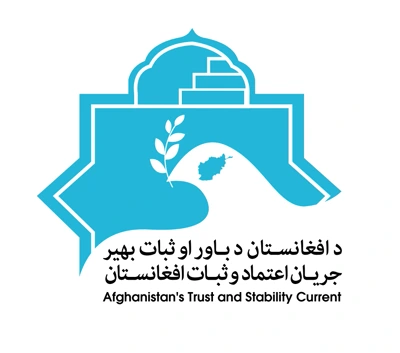
Afghanistan Trust and Stability Current
In the name of Allah, the Most Gracious, the Most Merciful
إِنَّ اللّهَ لاَ يُغَيِّرُ مَا بِقَوْمٍ حَتَّى يُغَيِّرُواْ مَا بِأَنْفُسِهِمْ
“Indeed, Allah will not change the condition of a people until they change what is in themselves” (Quran 13:11)
Preface
About half a century of war and instability in Afghanistan, apart from the independence struggles of our freedom-loving people, has resulted in nothing but poverty, ignorance, disease, and economic and social destruction.
The events and incidents of this half century have caused a crisis of distrust and damage to national unity, social justice and political stability in our country. Emphasis on ethnic, religious, linguistic and regional tendencies, and prioritizing them over collective and national interests, has led to the completely different and opposite views of our history and cultural and national symbols.
Forced migrations, cultivation and trafficking of narcotics, and Afghanistan becoming a field for the emergence and activity of extremist groups have called into question the political image and dignity of the Afghan people in the international community.
The efforts of internal political Currents and foreign countries to establish a stable political system in Afghanistan have also failed to pave the way for political stability and national trust in the country for various reasons.
Now, after recent events and the increasing political, social, economic and cultural difficulties of the country, the need to think about the reasons and factors of the crisis of national distrust and political instability in Afghanistan and the lack of consensus on the national consensus and interests, with the aim of providing effective solutions to the Afghan issue, has become more urgent than ever.
Therefore, it is necessary to establish a government that guarantees national trust and political stability in Afghanistan as soon as possible, and to provide the ground for broad national participation, social justice and sustainable development, and to guarantee the basic and civil rights of citizens, especially women and children. Otherwise, Afghanistan will face a human catastrophe, and the global community will face a flood of forced migrations, increased drug trafficking and the threat of extremist groups. In other words, based on past events in Afghanistan, stability and peace in Afghanistan guarantee regional and international security, and the continuation of the crisis in Afghanistan causes fragility of regional and global security.
Based on what has been said, a group of reformist children of the country have founded the “Trust and Stability Current of Afghanistan”. The Trust and Stability Current of Afghanistan is a non-factional and comprehensive national Current and the result of understanding the objective conditions of the country and the just and logical desires and aspirations of our people.
We believe that the prerequisite for creating the basic grounds for national participation and social justice is to institutionalize the culture of interaction, tolerance and acceptance of each other and pluralism.
On this basis, we, the members of the first congress of the “Trust and Stability Current of Afghanistan”, in order to provide practical grounds for efforts to implement the basic goals and fundamental principles and active participation of all political parties, social organizations and independent figures, both men and women, approve and ratify this constitution, which has been prepared and organized in 8 chapters and 45 articles, as the by law of the “Trust and Stability Current of Afghanistan”.
The “Trust and Stability Current of Afghanistan”, with trust in Almighty Allah and reliance on the will of the peace-loving people of Afghanistan, calls on all reformist forces of the country to cooperate and participate positively and actively in the direction of the goals and principles of this Current with a high spirit of commitment, honesty and sacrifice, in order to overcome the Current difficult conditions and achieve strong national trust and sustainable political stability.
Note:
– This constitution was approved at the first founding congress of the Trust and Stability Current of Afghanistan on Jaddi 1402, corresponding to January 2023 in Frankfurt, Germany. It has also held founding members preliminary meetings on Sunbula 11 and 12, 1402, corresponding to September 2 and 3, 2023 in Chemnitz.
With hope for peace, stability and prosperity of our dear homeland
Trust and Stability Current of Afghanistan
Hamburg – Germany
Sunbula 31, 1403 (September 21, 2024)
Chapter One
Definition
The “Trust and Stability Current of Afghanistan” consists of reformist figures of the country, including women and men.
The “Trust and Stability Current of Afghanistan” is a non-factional and comprehensive national Current and representatives of political parties, and social organizations can also be members of it.
The “Trust and Stability Current of Afghanistan”, which is hereinafter referred to as the Current in this by law, has independence of opinion and has full legal figure.
Chapter Two
Basic Lines
Article 1 – Preservation of Islamic, unified and economy-oriented Afghanistan and defence of political independence, territorial integrity and national sovereignty.
Article 2 – Institutionalization of the culture of interaction, tolerance and mutual acceptance and avoidance of any hostile positions far from ethics and social customs and seeking revenge.
Article 3 – Given the very fragile ethnic structure and texture in the region, any attempt and emphasis on changing the Current political geography of Afghanistan based on ethnic issues is problematic and unacceptable, as it will lead to extensive geopolitical changes at the regional level and provoke the reaction of states. Therefore, the state-building process in Afghanistan should be based on the principle of mutual respect with other states and countries in the region.
Article 4 – Guaranteeing the principle of separation and independence of the three powers (executive, legislative and judicial) as the fundamental principles of a democratic system.
Article 5 – Preventing any interference and influence in the judiciary and strengthening the rule of law is the only way to ensure judicial justice, prevent financial and administrative corruption and ultimately achieve social justice. Therefore, institutions for protecting and safeguarding rights such as police, prosecutors and judiciary should be completely professional, non-political and non-partisan.
Article 6 – Strengthening civil society structures, civil society, free media and institutions monitoring government functions and preserving and strengthening the Independent Human Rights Commission of Afghanistan.
Article 7 – Defending the fundamental rights and freedoms of all citizens, including retirees and persons with disabilities and special needs.
Article 8 – Guaranteeing all the basic rights of Afghan religious minority citizens such as Hindus and Sikhs in performing their religious and cultural rituals and ceremonies.
Basic Goals
Article 9 – Paving the way for determining the type of system: Republic (including federal, parliamentary and presidential), Islamic Emirate and constitutional monarchy (parliamentary monarchy) are more considered by scholars, influential people, politicians and civil society of Afghanistan.
Based on discussions with people and various political and civil Currents, each of these political models has its supporters and opponents.
The final decision on the type of future political system of Afghanistan depends on the opinion and vote of the majority of the Afghan people.
Article 10 – The proposal and emphasis on the recognition of positive and active neutrality of Afghanistan by the United Nations Security Council, and ensuring political and military non-interference in Afghanistan’s affairs by other countries through this council.
Article 11 – Explaining and practically pursuing Afghanistan’s economy-oriented policy in interaction with neighbours and the world.
Article 12 – Resolution of all disputes with our neighbours under the supervision of the United Nations and the Organization of Islamic Conference to reach a regional consensus that ensures lasting peace and stability in the region.
Article 13 – Emphasis on facilitating and welcoming the creation of plan-oriented and non-ethnic political parties. In other words, the creation of national parties to achieve a citizen-oriented society, transitioning from individual and ethnic competitions to party competitions based on patriotic and citizen-oriented political plans, is important and constructive. To achieve this, revision of the law on political parties in Afghanistan is mandatory.
Article 14 – Provincial councils and district councils should be elected through free, fair and transparent elections in their respective areas in order to fulfil the principle of social fairness.
Mayors should be elected through free, fair and transparent elections, but the appointment of governors can be done as follows: Three to five candidates for the position of governor from the residents of each province should be introduced to the first authorized person of the country through a joint meeting of the district councils and the provincial council of the respective province.
Article 15 – In order to implement the historical role of scholars, clerics and influential reformers of Afghanistan in ensuring peace and stability in the country, the necessity of establishing the Supreme Council of Scholars, Clerics and Influential Figures of Afghanistan is emphasized.
The manner of formation, duties and powers of this council will be later drafted and approved by the competent legislative authorities of Afghanistan.
Article 16 – If the positive and active neutrality of Afghanistan is recognized by the UN Security Council and non-military interference in Afghanistan’s affairs is guaranteed, in order to avoid high financial costs, the Afghan army should be limited in the Current conditions, and after reaching the stage of political stability and national trust, the period of compulsory service and the process of strengthening the national army should begin.
Army members should not have membership in political parties and should not interfere in political affairs.
There is also a need to create a professional and experienced police and national intelligence administration to ensure public security and order.
Article 17 – Persistent efforts to preserve historical monuments and cultural heritage of the people of Afghanistan.
Chapter Three
Plans
Article 18 – Holding regular meetings under the title of “National Trust Meetings” until reaching comprehensive trust and stability.
Article 19 – Struggle and purposeful effort to achieve national consensus as well as regional and international consensus to solve the Afghanistan problem.
Article 20 – Creating think tanks and organizing effective research plans with the aim of scientific and fundamental root cause analysis of Afghanistan’s complex issues in various social, economic, political and regional and international relations dimensions.
Article 21 – Creating online training courses for our compatriots, especially girls inside Afghanistan who are deprived of access to education.
Article 22 – Establishing foundations and associations to provide financial and human rights assistance to all citizens, especially women, children and people with disabilities and special needs.
Article 23 – Strong media and virtual presence to present the fundamental views, analyses and positions of the Current in relation to national and international developments.
Article 24 – Holding roundtables, seminars and scientific and research conferences with the aim of organizing strategic plans of the Current.
Article 25 – Honouring prominent figures of the country, holding art festivals and cultural plans and strengthening the role of youths in all social fields.
Long-term and strategic plans
Article 26 – The long-term and strategic plans of the Current are based on six basic principles and goals:
1 – Realization of national trust,
2 – Creating an economic-centred Afghanistan,
3 – Restoring Afghanistan’s positive and active neutrality,
4 – Fair distribution of power to institutions and structures instead of individuals and parties as representatives of tribes, religions and political parties. In addition, defining and organizing the relationship between the capital and provinces, taking into account the two parallel goals of increasing local authorities and preventing the weakening of the central government’s authority,
5 – Establishing a political system that guarantees the fundamental principles of sustainable stability, free and transparent elections, plurality of political parties, separation and independence of the three powers and unconditional observance of the country’s constitution,
6 – Institutionalizing the culture of de-escalation, good neighbourliness, peaceful coexistence and mutual respect with neighbouring countries and the world.
Chapter Four
Organisational structure
Article 27 – All institutions, specialized departments and representatives of the Current are led by a collective management system while maintaining centrality.
Article 28 – The organizational structure of the Current is as follows:
A – Congress:
The congress is the highest organization of the Current which is held once every five years in normal conditions by the Leadership Council. The congress can also be held with exception before the deadline if proposed by two-thirds of the members of the Leadership Council of the Current.
Members eligible to vote in the congress are:
1 – Founding members of the Current,
2 – Members of the Leadership Council of the Current,
3 – Members of the Executive Board of the Current,
4 – Members of specialized departments of the Current,
5 – Members of the Current’s representatives,
6 – Some active and prominent members of the Current who are elected through free, secret and direct elections from among the provinces of the country and in the Current conditions from among the Current’s representatives abroad. In special conditions, these individuals can be elected based on the proposal of the Executive Board and approval of two-thirds of the votes of the Leadership Council members, in such a way that their number is not more than the total five members mentioned above.
The congress has the following authorities and duties:
1. Listening to, approving or rejecting the report of the Leadership Council and in special conditions the report of the Executive Board,
2. Changing and amending the constitution, anthem, logo and other consensual documents of the Current,
3. Electing the members of the Leadership Council of the Current by secret, free and direct vote for a period of five years. (In the first congress of the founding members of the Current, the founding members of the Current are directly appointed as members of the Leadership Council of the Current without the need of a vote).
4. Making decisions on the expulsion of a founding member of the Current proposed by the Leadership Council with the presentation of necessary and reasoned documents,
5. Approving the budget and overall organization of the Current,
6. Determining the stage and final goals and duties of the Current in accordance with the by law and other accepted consensual documents by considering important national and international issues,
7. Listening to suggestions, opinions and criticisms of members participating in the congress and making appropriate decisions about them,
8. Making decisions on other important matters and issues related to the interests of the country raised during the congress,
9. The convening of the congress becomes legal when, in addition to the appointed members, two-thirds of the elected members are present,
10. Approvals, decisions and resolutions of the congress are enforceable after obtaining the majority vote of the participating members eligible to vote and in special and exceptional cases, which are specified in this by law, after obtaining two-thirds of the votes of the participating members eligible to vote.
11. The authorities and duties of the Congress, to a limited or full extent, can be delegated to the Leadership Council by a decision of two-thirds of the voting members of the Leadership Council. In this case, the Leadership Council is obliged to submit a complete report of all its actions to the next Congress for approval.
B – Leadership Council
In the interval between two Congress sessions, the Leadership Council is the highest decision-making and supervisory body for implementing the goals and duties of the Current. For the first time, some members of the Leadership Council are elected according to the third paragraph of the authorities and duties of the Congress. Then the rest of the Leadership Council members are elected by the first founding Congress of the Current, based on the proposal of the Executive Board and the majority vote of the previously elected Leadership Council members.
The Leadership Council normally meets once a year, convened by the Executive Board.
The Leadership Council can also be held exceptionally upon the proposal of two-thirds of the Executive Board members or the written proposal of the majority of the mentioned Council members.
The Leadership Council has the following authorities and duties:
1 – Preparing the agenda, work plan and arrangements for holding the Congress,
2 – Proposing changes and amendments of the by law, anthem, emblem and other consensual documents of the Current, considering obtaining two-thirds of its members’ votes for final approval by the Congress. In case it is not possible to hold the congress for any reason, the Leadership Council of the Current can approve all necessary changes in the mentioned matters with the agreement of two-thirds of its members.
3 – Proposing committed and active members of the Current for election of new members of the Leadership Council of the Current to the Congress,
4 – Proposing the budget and overall organization of the Current for final approval to the Congress,
5 – Listening to, approving or rejecting the report of the Executive Board of the Current. The Leadership Council can, by providing documented reasons based on ethnic, religious and linguistic prejudices and considering the vote of two-thirds of its members, dismiss all members of the Executive Board or some of them and proceed to elect new members of the Executive Board.
It is clarified that the dismissal of all or part of the Executive Board members cannot cause the dismissal of the Current’s president. The dismissal of the Current’s president must be requested separately by two-thirds of the Leadership Council members.
6 – Approving the work plan, budget and organizational matters based on dismissal, promotion or expulsion of an ordinary member, Leadership Council member and Executive Board member is proposed by the Executive Board. All these cases must comply with the by law and other resolutions, decisions and resolutions of the Current’s Congress.
7 – Discussion over national and international situations and listening to proposals, views and criticisms of the Current’s leadership members and making appropriate decisions and measures about them,
8 – Establishing and dissolving the Current’s representatives proposed by the Executive Board,
9 – Supervising the implementation of resolutions, decisions and approvals of the Current’s Congress,
10 – Making decisions on other important matters and issues raised during the Leadership Council meeting,
11 – The decisions and resolutions of the Leadership Council – except for special cases specified in this by law – are fully enforceable on the Executive Board, specialized departments, designated representatives and other members of the Current after obtaining a majority vote of the participants in that council.
12 – The formation and convening of the Leadership Council becomes legal with the participation of two-thirds of its members.
13 – In the first session of the Leadership Council, the president of the Current is elected from among the most committed and active members of the Leadership Council by secret ballot and by obtaining a majority vote. If there is only one candidate for the presidency of the Current, voting can also be done openly.
The process of electing the president of the Current and approving the members of the Executive Board of the Current by the Leadership Council can also be done during the Congress.
The president of the Current, after being elected, in the mentioned session or at the earliest suitable opportunity, proposes the list of Executive Board members to the Leadership Council for approval. Executive Board members can continue their work with full authority after being appointed by the president of the Current until receiving a vote of approval from the Leadership Council.
The voting mechanism and method of the members of the Leadership Council to the members of the Executive Board will be determined by the Leadership Council itself during its session.
In the event of the death, an incurable illness, or the dismissal of the head of the movement, the Executive Committee must, within fifteen days, select another person from among its members as the new head of the current and present them to the Leadership Council for approval and voting.
It is important to note that the dismissal of the head of the current occurs upon the submission of valid documents and evidence proving a violation of the constitution, fundamental principles, resolutions, and decisions of the Leadership Council. This dismissal must be proposed by two-thirds of the Executive Committee members and approved by two-thirds of the Leadership Council members.
The duties and authorities of the head of the current are organized and regulated in a separate procedure and directive.
The authorities and powers of the President of the Current are arranged and organized in a separate procedure and regulation.
14 – The authorities and duties of the Leadership Council, to a limited or full extent, can be delegated and transferred to the Executive Board. In this case, the Executive Board is obliged to submit a complete and accurate report of all its actions to the next session of the Leadership Council of the Current for approval.
15 – The Leadership Council is responsible and obliged to report to the Congress.
C – Executive Board:
In the interval between Leadership Council sessions, the Executive Board is the always active and leading part of the Current’s affairs.
The executive committee is selected from among the members of the leadership council by the head of the current based on the principles of commitment, honesty, and meritocracy, and is proposed for approval to the leadership council.
The composition of the Executive Board includes the president, a number of heads of specialized departments and some committed and active figures of the Current, all of whom will be selected from among the members of the Leadership Council.
The term of office for executive committee members is valid until the end of the five-year presidency term.
Dismissal of a member or members of the executive committee can occur due to reasons such as non-compliance with principles, corruption, negligence, or secrecy, with the majority vote of the executive committee members. In this case, a new member will be introduced to replace them in the executive committee by the leadership council.
In special conditions and situations where the Congress and Leadership Council cannot hold meetings under certain conditions, the Executive Board can fully implement their duties and authorities.
The Executive Board has the following authorities and duties:
1 – Preparing the agenda, work plan and arrangements for holding the Leadership Council session,
2 – Proposing the work plan, budget and organizational matters based on dismissal, promotion or expulsion of an ordinary member, Leadership Council member and Executive Board member for final approval to the Leadership Council session by considering obtaining two-thirds of its members’ votes,
3 – Implementation of proposals of the president of current regarding the increase or decrease of exclusive and representative branches,
4 – Limiting or expanding the practical authorities and duties of specialized departments and representatives of the Current,
5 – Managing the specialized departments and representatives of the Current inside and outside the country,
6 – Full and unconditional implementation of all resolutions, decisions and decrees of the Congress and Leadership Council of the current,
7 – Making appropriate decisions on all national and international issues and, if necessary, presenting specific proposals on the matter to the Leadership Council,
8 – Concluding agreements to establish good relations and mutual cooperation with political parties and social organizations at the national and international levels and, if necessary, presenting specific proposals on the matter to the Leadership Council,
9 – Concluding economic contracts, launching service and public benefit projects, and circulating the Current’s capital and assets and overseeing them,
10. Appointing spokespersons and special representatives of the Current at the proposal of the President of the Current,
11 – Organizing constructive and effective roundtables, seminars, conferences and gatherings in various areas of national and international life,
12 – Implementing other matters that are in accordance with the by law and other accepted consensual documents of the Current,
13 – All decisions and resolutions of the Executive Board are applicable to all specialized departments and designated representatives and other members of the Current after obtaining a majority vote of its members – in special cases specified in this by law after obtaining two-thirds of the votes of its members,
14 – The Executive Board meeting becomes legal with the participation of two-thirds of its members,
15 – The Executive Board is responsible and obliged to report to the Leadership Council.
Specialized Departments
The specialized departments of the Current are: Political Department, International affairs Department, Secretariat Department, Members’ affairs Department, Scholars and Influential Figures Department, Women’s Department, Youths Department, Cultural Department, Legal Department, Scientific research Department, Press and Publications Department, Financial Department.
The specialized departments of the Current consist of the head and members of the relevant working parts.
The manner of operation of each department with the duties of its officials is arranged and organized in separate regulations.
Article 29 – The election of members of the Current’s leadership is based on the principle of free, secret, direct and general elections, except in cases where otherwise specified in this by law.
Article 30 – The Current can establish organizational nuclei or special representatives in the provinces of the country and in the current conditions abroad for effective progress of affairs, which have the following structure:
A – RepresentativesThe Current’s representatives normally hold meetings once a month.
The Current’s representatives consist of members of the executive office and committed and active members of the Current at the relevant local level.
The Current’s representatives have specialized departments in their organizational structure and lead all activities and functions of members and leadership of the Current at the relevant local level.
B – Executive Office:
The executive office of the Current’s representatives manages, pursues and implements the daily affairs of the Current on local level.
This office consists of the general manager and heads of specialized departments of the Current’s representatives in the relevant area. The head of the executive office is simultaneously the head of the relevant provincial or representative office of the Current.
Chapter Five
Membership Conditions
Article 31 – Any citizen of Afghanistan – male or female – who has completed 18 years of age, has legal and civil capacity, has studied and accepted the by law and other consensual documents of the Current, can obtain membership in the Current.
Chapter Six
Rights and Duties of Members
A – Rights:
Article 32 – The right to be elected and to elect in all leadership bodies of the movement, Article 33 – Beneficial and effective use of all moral and material facilities of the Current, Article 34 – Free expression of opinion in all gatherings organized by the Current, with emphasis on the right of criticism, objection and proposal of members with the aim of increasing the usefulness and effectiveness of the behaviour and performance of the Leadership Council, Executive Board and heads of departments of the Current.
B – Duties:
Article 35 – Unconditional observance of the by law, consensual documents, resolutions and declarations of the Current,
Article 36 – Active presence and participation in meetings, gatherings and assemblies organized by the Current,
Article 37 – Maintaining the confidentiality of decisions and resolutions of the Current, Article 38 – Implementing decisions, resolutions and rulings of the Current’s leadership that have been obtained by a majority vote of its members and are in accordance with the by law and other accepted documents of the Current,
Article 39 – Having commitment and a high spirit of honesty in implementing the long-term and strategic plans and principles of the Current,
Article 40 – Positive and active participation in national and international affairs with full attention to the independent policy of the Current and within the framework of its defined policies.
Chapter Seven
Financial Affairs
Article 41 – The main part of the Current’s income is composed of donations from members and national merchants of Afghanistan.
Article 42 – The Current can, in order to strengthen its financial foundation, attract necessary economic assistance and financial aid from charitable institutions and international aid organizations by taking into account the principle of not compromising the independence of opinion and action of the Current.
Article 43 – The Current can also undertake a series of economic contracts and establish service projects and commercial transactions that do not conflict with the general laws of Afghanistan and, in the current conditions, the host countries of immigrants.
Article 44 – The details of precise implementation of financial affairs are regulated in a separate bylaw of the financial department.
Chapter Eight
Emblem and Anthem of the Current
Article 45 – The Current has its own special anthem and emblem as follows:
1 – Emblem:
Explanation of the Current’s emblem:
– Colour: Light blue – symbol of consultation, trust, stability, loyalty, wisdom, faith and self-confidence
– Altar and pulpit at the top: symbol of religiosity and belief
– Wheat ear: symbol of welfare and development
– Wheat ear pointing upwards towards the altar and pulpit indicates that the dream of economic development and welfare is in line with religious values. (Based on the hadith of the Prophet of Islam (PBUH): “Poverty almost leads man to disbelief.”)
– White dove: symbol of peace
– The dove’s eye showing the map of Afghanistan and placed in the centre of the emblem indicates Afghanistan’s urgent need for peace and tranquillity and our homeland’s expectation of peace. On the other hand, the centrality of this map shows Afghanistan’s special place in Asia and the world.
– A strong hand: The overall image depicts a strong hand, which represents national stability and strength.
2 – Anthem of the Current:
Though autumn has for countless years
Brought darkness and defeat and gloomy clouds
Above the brow of this land
We move forward
Towards a new spring
Towards trust
Towards a lasting stability
*** To the weary homeland
Endless pure waters flow again
The homeland stands tall once more
Full of blossoms, proud
By the grace and blessing of the kind Allah
By my effort
By your effort
By our effort
To the plains of this world
***
For the wounds of this homeland
Equality, brotherhood was the cure
The welfare of every individual of this homeland was our goal
We bring back smiles to the tearful plains
We give the tired wings of doves
Flight to the heights of the sky once more
To our dear and suffering homeland
We give a new place in the world once again
***
You rise again from among pains and needs
Women and men walk side by side again
We step with the pen on the roads of creation
We move forward
Towards a new spring
Towards trust
Towards a lasting stability
With hope for solidarity, stability and prosperity of dear Afghanistan!
Afghanistan Trust and Stability Current